Research Initiative

Dielectric-Resilient Micro-Doppler Signal Extraction in Animals

A focused investigation into feasibility, fundamental physics, and signal separation limitations.

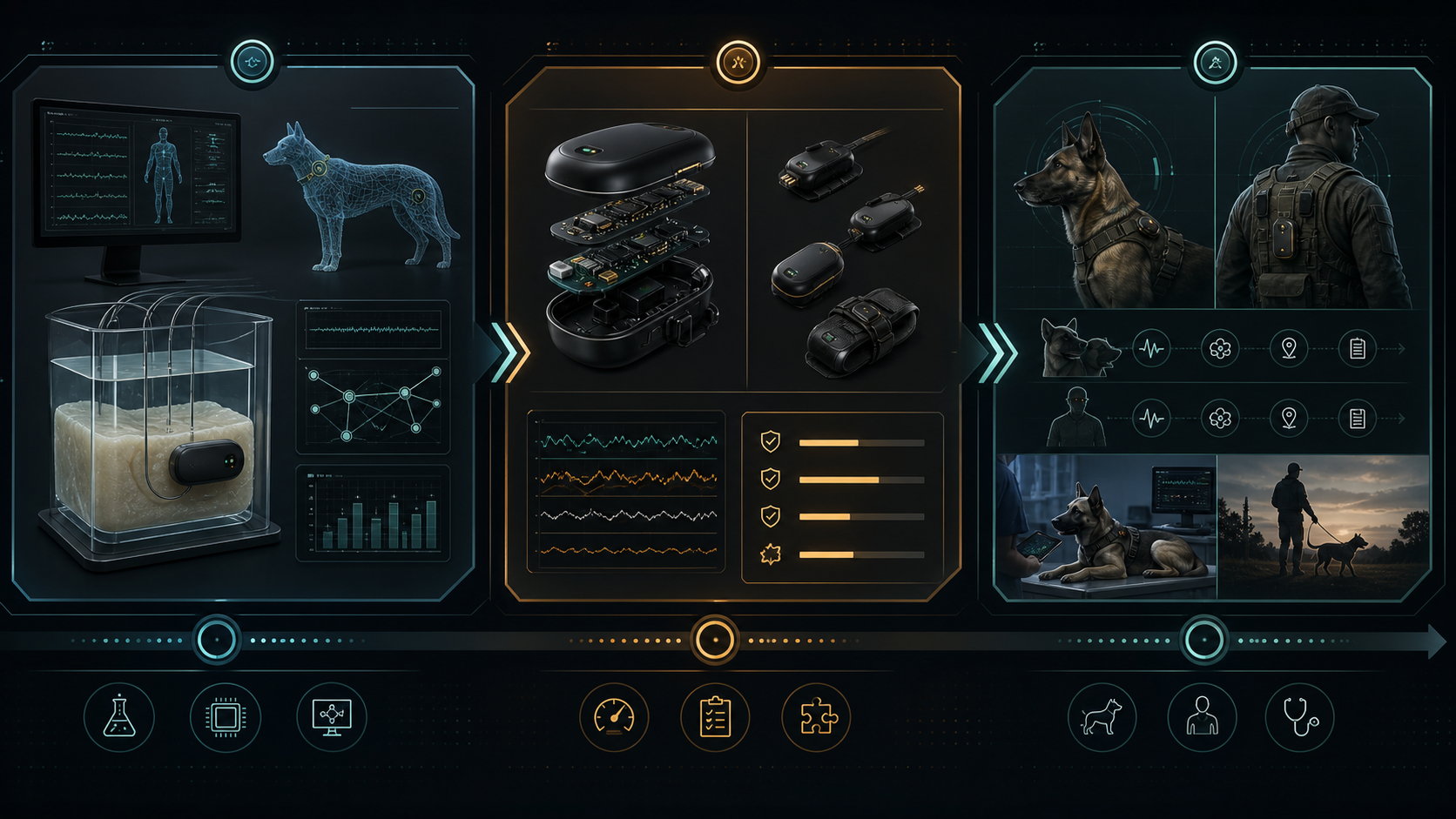
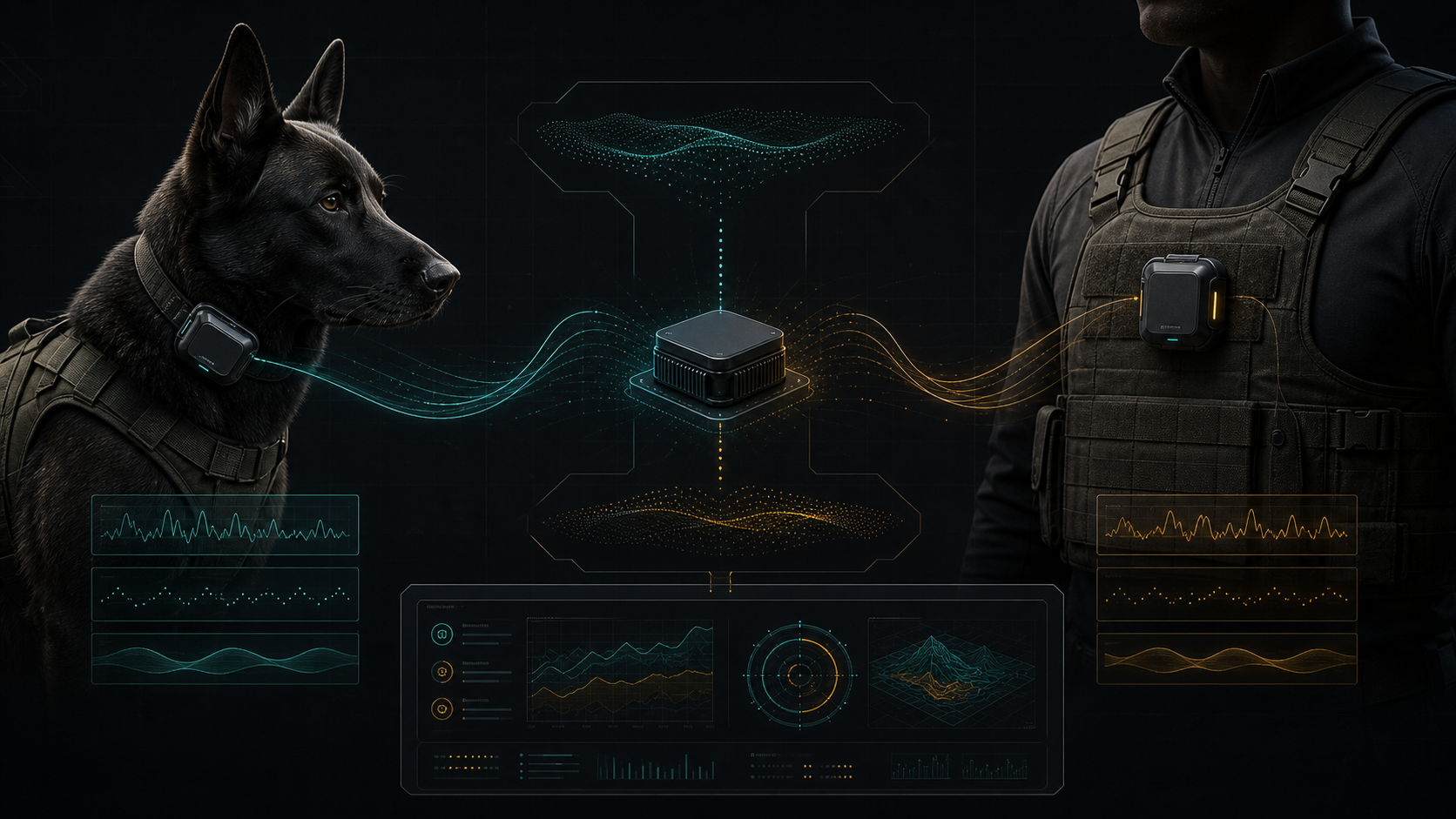
Investigating contactless cardiac and respiratory monitoring through dielectric-complex porous media using 60GHz FMCW radar.

Research Objective: Characterize the feasibility boundaries of mmWave micro-Doppler cardiac extraction through animal fur and establish a validated signal model for dielectric-complex media.

Plain Language Summary

Can we detect a dog's heartbeat through fur using radar? This research will find out—and document exactly where and why it fails.

1. Problem

Through-Fur Signal Attenuation

Continuous cardiac monitoring in animals requires penetrating fur—a dielectric-complex, porous, multi-layer material with variable density, moisture content, and thickness across breeds. Unlike human skin (relatively homogeneous), animal fur introduces:

  • Signal attenuation: Fur thickness ranges from 2mm (short-haired) to 15cm (double-coated breeds), causing unpredictable power loss
  • Phase distortion: Multi-path reflections from individual hair strands create phase noise that masks cardiac micro-Doppler signatures
  • Dielectric variability: Wet vs. dry fur changes permittivity by 10-50x, altering signal propagation characteristics
  • Motion artifacts: Fur movement from breathing, scratching, or environmental factors generates clutter that overlaps cardiac frequency bands

Prior mmWave vital signs research focuses on human subjects (exposed skin or thin clothing). The animal fur problem remains largely unexplored in literature, with no established signal models for through-fur cardiac detection.

Literature Gap: Existing literature does not provide validated through-fur cardiac signal models under varying dielectric conditions. Preliminary surveys suggest a gap in formal dielectric scattering models for mmWave radar in fur contexts. No peer-reviewed work addresses the compound challenge of variable fur density, moisture content, and physiological motion artifacts in animal subjects.

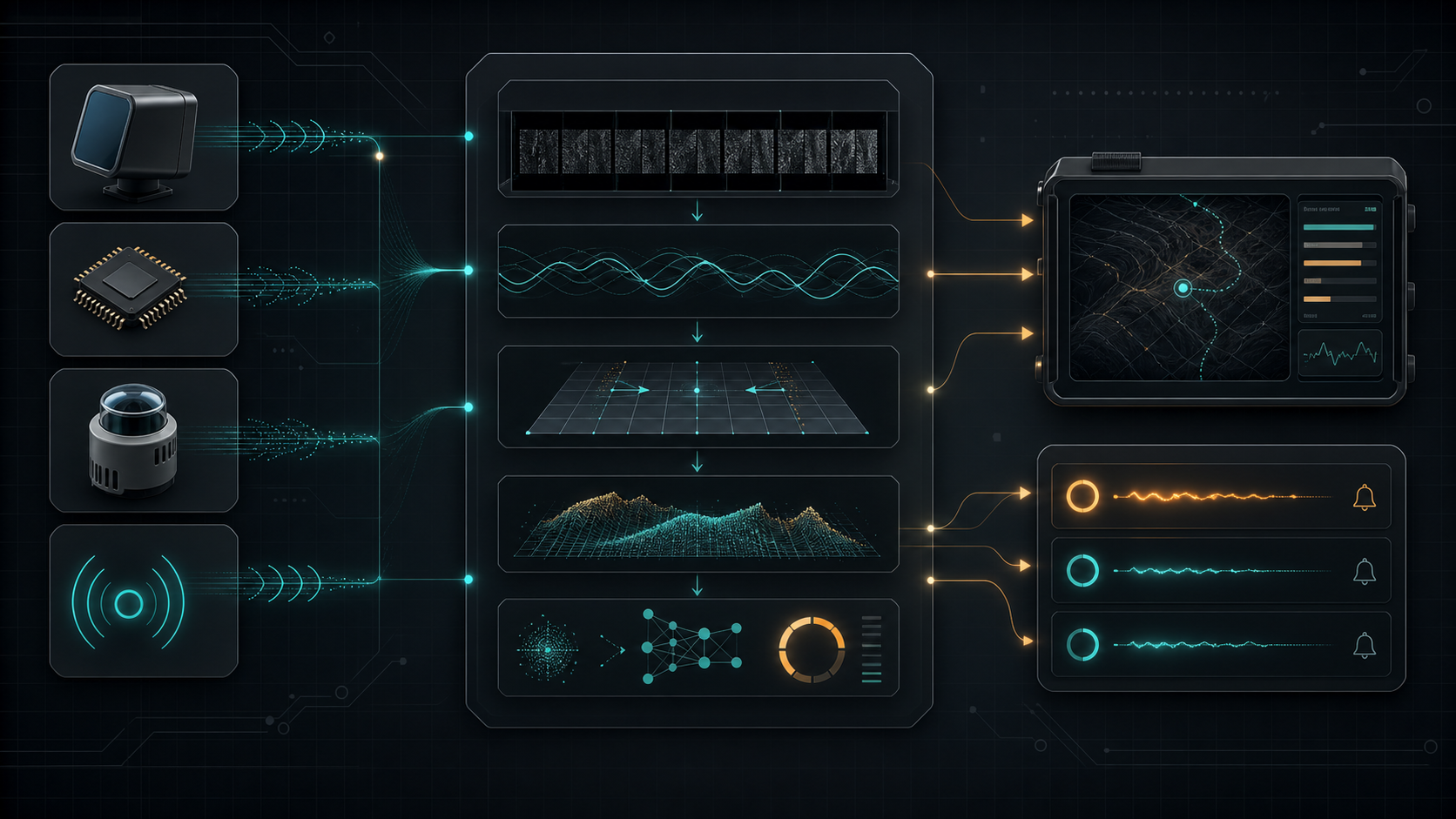
Signal Chain DiagramDiagram showing radar signal path from sensor through fur to chest wall and backA12160 GHzRadar Sensor2-150mmFur Layer(dielectric complex)AttenuationPhase NoiseSkinHeart0.1-1mmChest WallDSP PipelineI/Q → PhaseUnwrapBandpassFFTPeak DetectConfidenceSignal ProcessingCardiac signalNoise/artifacts

Figure 1. Schematic of 60 GHz FMCW radar signal propagation through animal fur, illustrating attenuation, multi-path scattering, and phase distortion mechanisms that degrade micro-Doppler cardiac signatures.

Spectral Overlap DiagramFrequency spectrum showing overlap between cardiac, respiratory, fur clutter, and panting bandsFrequency (Hz)00.10.50.82.03.05.010.0Power Spectral DensityRespiratory0.1-0.5 HzCARDIAC TARGET BAND0.8-3.0 Hz (48-180 bpm)Fur Clutter (Unknown Extent)Panting Harmonics2-4 HzGross Motion>5 Hz (filterable)Target cardiacFur clutter overlapPanting interferenceRespiratory (separable)OVERLAP REGION

Figure 2. Spectral band overlap diagram showing interference regions between target cardiac band (0.8–3.0 Hz), fur-induced clutter (extent unknown), and panting harmonics (2–4 Hz). Characterizing the fur clutter spectrum is a primary research objective.

Failed Signal PlotTime-domain plot showing cardiac signal buried in fur-induced noiseAmplitude (a.u.)+2+10-1-2Time (seconds)012345Through-Fur Signal: Thick Double-Coat (Simulated)Measured signalExpected cardiacSNR < 0 dBDetection Failed

Figure 3. Simulated failure mode: cardiac micro-Doppler signature (dashed) obscured by fur-induced noise (solid) under thick double-coat conditions (SNR < 0 dB). Empirical characterization of this failure boundary is a key research deliverable.

2. Hypothesis

Frequency-Domain Separation May Be Achievable

Fundamental Unknown

We do not know if cardiac micro-Doppler signatures remain separable from fur-induced clutter when in-band SNR falls below 0 dB. The hypothesis below will be tested empirically; negative results are scientifically valuable for establishing boundary conditions.

We hypothesize that cardiac micro-Doppler signatures (0.8–3.0 Hz) can be reliably extracted from through-fur radar returns using:

  1. Narrow bandpass filtering: Cardiac signals occupy a distinct frequency band (48–180 bpm = 0.8–3.0 Hz) separable from respiratory (0.1–0.5 Hz) and motion artifacts (>5 Hz)
  2. Phase-based displacement extraction: Converting I/Q radar samples to unwrapped phase yields chest wall displacement, which correlates with cardiac mechanical activity
  3. On-sensor coherent averaging: Configurable accumulation may improve signal-to-clutter ratio by 12–15 dB prior to digital signal processing
  4. Breed-specific calibration: Physiological models (HR ranges, fur characteristics) per breed can adjust acceptance thresholds and filter parameters

Explicit Failure Case

If fur-induced phase noise power exceeds cardiac signal power across the 0.8–3.0 Hz band (SNR < 0 dB after filtering), frequency-domain separation will fail. This is most likely in:

  • Wet, matted fur (maximum dielectric loss)
  • Thick double-coats >10cm (e.g., Chow Chow, Samoyed)
  • Vigorous panting (respiratory harmonics overlap cardiac band)

Characterizing these failure boundaries is a primary research objective.

3. Method

60GHz FMCW Radar Signal Processing

The following methodology is designed to produce quantitative evidence for the feasibility of dielectric-resilient micro-Doppler extraction. It is structured to reveal failure modes as well as successes, with explicit measurements that define the boundary conditions of the approach.

Hardware Configuration

SensorAcconeer A121 (60 GHz pulsed coherent radar)
Wavelength5.0 mm @ 60 GHz
Sample Rate100 Hz (Nyquist-compliant for 0–50 Hz signals)
Range6–15 cm (optimized to reduce environmental clutter)
Range Bins32 bins (~2.8 mm resolution per bin)
On-Sensor AveragingConfigurable coherent accumulation (1-63x) for SNR improvement

Signal Processing Pipeline

  1. I/Q Acquisition: Radar returns in-phase (I) and quadrature (Q) samples per range bin
  2. Phase Extraction: Compute phase = atan2(Q, I) for each sample
  3. Phase Unwrapping: Detect 2π discontinuities and maintain continuous phase for displacement calculation
  4. Displacement Conversion: displacement = phase × λ / (4π)yields chest wall motion in millimeters
  5. IIR Bandpass Filtering: 4th-order Butterworth filters isolate:
    • Cardiac band: 0.8–3.0 Hz (48–180 bpm)
    • Respiratory band: 0.1–0.5 Hz (6–30 breaths/min)
  6. FFT Analysis: 512–1024 point FFT on filtered signal to identify dominant frequency (spectral peak = heart/respiratory rate)
  7. Confidence Scoring: SNR estimation, peak prominence, and temporal consistency determine output reliability

Motion Gating

An LSM6DSOX 6-axis IMU provides acceleration data at 100 Hz. When motion exceeds 50 mG threshold, radar-derived vitals are flagged as potentially corrupted. This prevents false readings during scratching, walking, or postural changes.

Parameter Space Exploration

A key research objective is characterizing how radar configuration parameters affect micro-Doppler signal-to-clutter ratio (SCR) and cardiac waveform fidelity. We will explore burst duration, hardware accumulation scale factors, and dynamic profile selection based on motion state to understand tradeoffs between power consumption, noise floor, and cardiac signal clarity. These parameters represent tunable research variables rather than fixed engineering constraints.

4. Validation

ECG Ground Truth Comparison

Algorithm validation requires simultaneous radar capture and gold-standard ECG recording. Success and failure are defined by explicit, measurable thresholds:

Phase I feasibility is met if RMSE ≤ 5 bpm and beat detection ≥ 90% in stationary, dry-fur trials across at least three breed size categories.

MetricTargetRationale
Heart Rate RMSE≤ 5 bpmClinical utility threshold for resting monitoring
Heart Rate RMSE≤ 10 bpmAcceptable for activity/variable conditions
Beat Detection Rate≥ 90%Industry standard for physiological monitors
False Positive Rate≤ 5%Acceptable noise floor for research use

Failure Definition

If RMSE exceeds 15 bpm under controlled conditions (stationary, dry fur, optimal placement), or beat detection falls below 70%, the approach is considered infeasible for that fur type/condition combination. Such negative results will be documented as boundary conditions.

Validation Plot PlaceholderPlaceholder for radar vs ECG heart rate comparison plotPLACEHOLDERAwaiting hardware validation dataInsert: Radar HR (y) vs ECG HR (x) scatter plotwith linear regression and RMSE annotationRadar HR (bpm)1801501209060ECG HR Ground Truth (bpm)6090120150180Radar vs ECG Heart Rate AgreementExpected MetricsRMSE: [TBD] bpmR²: [TBD]Perfect agreement (y=x)

Figure 4. Placeholder for radar vs. ECG heart rate correlation (pending empirical data). Scatter plot will show mmWave-derived HR against 3-lead ECG ground truth with linear regression, RMSE, and R² metrics. Feasibility threshold: RMSE ≤ 5 bpm, R² ≥ 0.85.

Test Protocol

  1. Record 5-minute sessions across breed categories (toy, small, medium, large, giant)
  2. Vary fur conditions: dry, damp, post-bath
  3. Include brachycephalic breeds (respiratory artifact stress test)
  4. Concurrent 3-lead ECG with R-peak timestamps as ground truth
  5. Compute beat-by-beat correlation and aggregate RMSE
  6. Document all failure cases with SNR measurements and fur characteristics

5. Risk & Failure Modes

Technical Uncertainties

High Risk: Thick Double-Coat Attenuation

Breeds with >10cm fur depth (Samoyed, Chow Chow, Newfoundland) may attenuate 60 GHz signals below detectable threshold.

Mitigation Experiment:

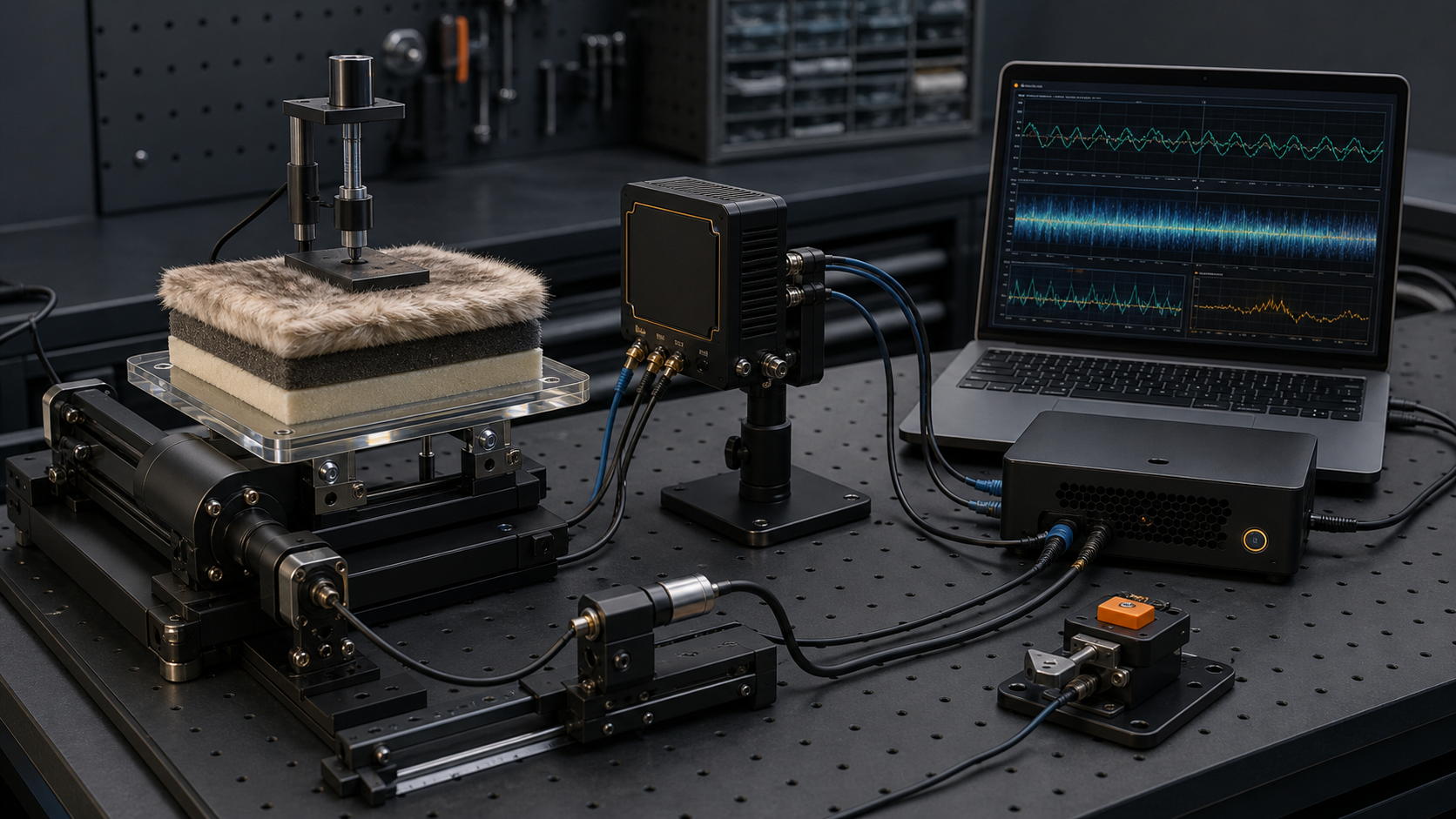
Controlled attenuation study using layered fur samples of known thickness (2cm, 5cm, 10cm, 15cm) to map signal loss vs. depth. If 60 GHz proves infeasible, evaluate 24 GHz radar as fallback (better penetration, reduced resolution).

Probability: Medium–High | Impact: Project-blocking for affected breeds

Medium Risk: Wet Fur Dielectric Shift

Water dramatically changes fur permittivity. Post-bath or rain-wet scenarios may require dynamic recalibration.

Mitigation Experiment:

Controlled water content variation study: measure dielectric properties and signal characteristics across dry, damp (light mist), wet (post-bath), and saturated conditions. Generate permittivity-to-SNR mapping for calibration.

Probability: High | Impact: Degraded accuracy, not project-blocking

Medium Risk: Panting Harmonic Interference

Rapid panting (2–4 Hz) generates harmonics that overlap the cardiac band.

Mitigation Experiment:

Characterize panting spectral signatures across temperature conditions. Develop thermal-context gating using ambient temperature sensor to flag panting-likely periods. Test harmonic rejection filters.

Probability: Medium | Impact: Reduced capture windows in hot conditions

Low Risk: Breed Database Incompleteness

Mixed breeds and rare breeds lack validated physiological parameters. Fallback: use size-category defaults (small/medium/large) with wider acceptance bands.

Probability: Low | Impact: Slightly reduced accuracy for edge cases

Go/No-Go Decision Framework

Phase I feasibility is determined by a binary success criterion applied to controlled validation trials:

GO (Feasible)

RMSE ≤ 5 bpm AND beat detection ≥ 90% in stationary, dry-fur trials across ≥ 3 breed size categories.

NO-GO (Infeasible)

RMSE > 15 bpm OR beat detection < 70% under controlled conditions (optimal placement, stationary, dry fur).

Conditions between these thresholds indicate partial feasibility requiring additional characterization or parameter optimization.

6. Impact

Research Outcomes & Applications

The primary outcome of this research is a validated signal model for penetrating heterogeneous dielectric media with mmWave radar. This fundamental knowledge establishes boundary conditions for through-fur sensing and characterizes the physics of signal propagation in complex porous materials.

If the approach proves feasible within defined accuracy thresholds, potential applications include:

  • Veterinary Telemedicine: Continuous remote monitoring of post-surgical patients, chronic disease management, and early anomaly detection
  • One Health Surveillance: Population-level cardiac health monitoring in working dogs, service animals, and shelter populations
  • Wildlife Conservation: Non-invasive vital signs monitoring for endangered species without capture stress
  • Generalized Complex Media Sensing: Methods developed here extend to other porous dielectric media (clothing, bandages, foliage)

Even negative results (characterizing conditions where through-fur sensing fails) contribute valuable knowledge to the radar sensing community by establishing physical limitations and guiding future research directions.

7. Prior Work

Signal Processing Infrastructure

This research builds upon an existing embedded signal processing framework implemented on ARM Cortex-M33 microcontrollers. The infrastructure includes:

  • 60 GHz radar driver with IQ frame acquisition and power management
  • Fixed-point DSP library (FFT, IIR filters, peak detection)
  • Multi-sensor fusion framework (radar + inertial measurement unit)
  • Power-optimized burst scanning with activity-aware scheduling
  • Physiological model database covering multiple breed size categories

Current Capability

The system can acquire radar IQ data, extract phase-based displacement signals, apply band-limited filtering, and produce heart rate estimates with confidence metrics. Motion gating prevents spurious readings during gross body movement.

Research Gap

While the signal processing chain is functional for controlled scenarios (exposed skin, thin materials), performance through dense animal fur is uncharacterized. No validated signal model exists for this dielectric-complex propagation medium. Phase I research will establish whether the existing approach generalizes to through-fur sensing or requires fundamental modifications.

Affiliation

This research initiative is led by Lutz Innovations LLC in pursuit of fundamental sensing research.